
For ecommerce AI visibility, make both the product and the seller easy to understand. Use accurate specifications, useful comparisons, current price and stock information, and clear UAE delivery and return policies. A tool naming a product does not mean it recommends your store. Check product discovery and merchant discovery separately.
The short version
- Explain the product with verified facts rather than supplier marketing copy.
- Keep product pages, structured data and supported feeds consistent.
- Make delivery, returns and seller identity easy for a UAE shopper to check.
Why does AI name the product but not my store?
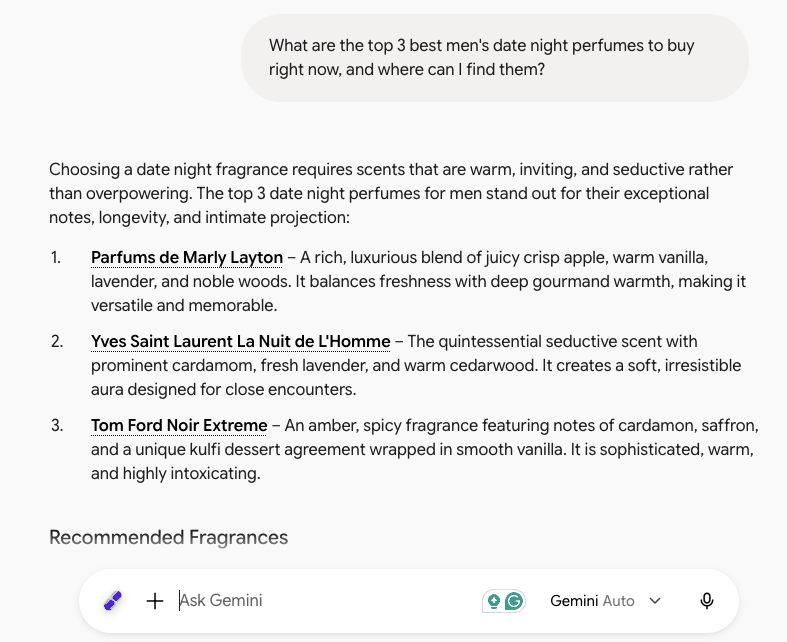
A shopper may ask which fragrance suits an occasion, then ask where it is available with delivery to Dubai. The first question is about the product. The second is about a seller and fulfilment.
Those need different information. Product specifications help someone compare options. Delivery coverage, policies, availability and genuine business details help them assess a store.
Keep this distinction in your visibility checks. If an answer names a brand you sell but never names your store, record product recognition rather than merchant discovery.
What information is missing from my product pages?
Start with your important products, not every item in the catalogue. Include the correct product name, brand, model or variant, size, material, compatibility and contents where those details apply.
Use the manufacturer's verified specifications for factual details. Explain them in your own clear words. If a supplier description says “premium quality” but gives no evidence or specification, do not treat that phrase as a verified fact.
A practical description helps a shopper know what arrives, how it is used and what needs checking before purchase. For clothing, dimensions and sizing matter. For electronics, compatibility and included accessories matter. For a craft material, mixing or use details must match the actual product guidance.
Do not invent certification, performance, origin or warranty claims to improve the copy.
Why does my product show the wrong price or stock?
Your product page, structured data and any feed used by a supported sales channel should describe the same item. Check price, currency, availability, variant identity and the destination URL.
Google's product structured data documentation explains ways to describe product information for eligible search experiences. It does not promise an AI product recommendation.
On Shopify, review what your existing theme and channel integrations already provide before adding another schema or feed tool. Duplicated or conflicting product information makes maintenance harder.
Platform shopping programmes carry real eligibility rules, and they are worth reading before anyone puts a channel in a proposal. To sell on ChatGPT through Shopify, Shopify requires that your store sells to customers in the United States, although the store itself can be based outside it. OpenAI states separately that shopping in ChatGPT is currently live for users in the U.S., with wider regions planned but no date given. For a store selling only inside the UAE, that means the product carousel is not the surface to chase yet, and clear product pages an AI crawler can read are. We set out what each route needs, and what it cannot promise, in why ChatGPT is not showing your products.
| Information | Where it should agree | Why the buyer cares |
|---|---|---|
| Product identity | Page, variant and supported feed | They receive the item they compared |
| Price and currency | Visible page and structured information | They can judge the actual offer |
| Availability | Page and maintained channel data | They can buy or choose an alternative |
| Delivery and returns | Product links and actual policy | They understand the seller's responsibilities |
Do my collection pages do anything for AI?
A collection should help the shopper understand the range. Explain the meaningful difference between options in a short introduction, then provide useful navigation and filters.
If someone shopping for candle wax needs to compare wax types, link to a buying guide that explains their actual use and handling differences with verified information. Do not fill the collection with a long repeated keyword paragraph.
Keep out-of-stock handling and replacement options clear. A page that appears relevant but cannot help the shopper buy or choose an alternative may create an enquiry without resolving it.
Should I write comparison pages?
Choose questions your customers ask before purchasing. “Which bottle size should I choose?” or “Which accessory fits this model?” can be more useful than another generic best-products list.
State your comparison method. Identify the products, the use case and the facts checked. If a conclusion is your team's opinion, say so.
Avoid labelling every product you sell the winner. If a cheaper option fits a simple use, explain that. If a product needs an accessory, show the requirement before checkout.
Does my UAE delivery information matter?
Tell customers where you deliver, how they can check an estimated timescale, what shipping costs apply and what happens if an item is unavailable. Use your actual policy, rather than a generic next-day promise.
Make the seller identity and customer service route easy to find. Explain returns and warranty arrangements accurately. Where a policy differs by product, help the buyer find the relevant condition.
A useful policy page should be linked from product pages. A payment icon alone does not explain those responsibilities.
Our guide to selling perfume online in the UAE covers related store and advertising decisions.
How do I tell if any of this worked?
Use separate prompts for product suitability, comparisons and seller discovery. Record mentions and visible sources, then compare identifiable visits with add-to-cart activity, purchases and returns.
A product guide may assist research without creating an immediate order. A high volume of visits to an unavailable item is also different from profitable demand.
AdGrow's AI visibility service for UAE ecommerce stores connects product information, collection pages and buying guides. Start with a free AI visibility audit to find which catalogue or seller-information gaps matter first.
For a store the hard part is being resolved as the seller, not just having the product understood. See AI visibility for UAE e-commerce, or request the free audit.
Frequently asked questions
Is a product mentioned by AI the same as my store being recommended?
No. Record product recognition and seller discovery separately. The answer may name a product without mentioning any retailer.
Should I rewrite every Shopify product at once?
Start with important products and confirmed information gaps. Check accuracy and outcomes before expanding, especially where variants, feeds and policies need coordination.
Do buying guides need to promote my products in every paragraph?
No. Explain the decision clearly, including trade-offs and suitability. Link to relevant products where that helps the reader take the next step.
Sources and further checks
Platform guidance checked on 12 October 2026. Practical recommendations and hypothetical examples are AdGrow’s editorial guidance, not platform guarantees.