


AdGrow

Book a call

Fashion and modest wear marketing in Dubai and the UAE

Where the return rate, not the cost per sale, decides the profit.

AdGrow runs paid acquisition for fashion and modest wear brands in the UAE and the Gulf: abaya and kaftan labels, modest ready-to-wear, occasion wear and contemporary local designers.

In fashion the number that decides profitability is almost never the cost per acquisition. It is the share of what you sell that comes back, and the cost of handling it. A brand at 4x reported ROAS and a 30% return rate is often making less than a brand at 2.5x with returns under 10%.

Abaya, modest wear, occasion Meta, TikTok, Google Shopping Senior-led account teams

Brands we work with

  • VMP Consult logo
  • EliteCare Medical Center logo
  • Sarab logo
  • Muslim Lifestyle Store logo
  • Euphoria Perfumes logo
  • alqamees logo
  • ProAlign Smile Shop logo
  • Resin Art Hub logo
  • mas organic logo
  • Expert Leaders Medical Center logo
  • Al Waha Bird Control logo
  • Platinum Medical Center logo
  • Genové Dermatologics logo
  • YesPasta logo
  • Luxury Mansion logo

The anchor number

51.6%.
The half of the business ROAS cannot see.

On a UAE store we manage, returning customers produced 51.6% of a AED 478,539 quarter. In fashion, retention and returns are the same conversation.

Over one quarter on a UAE store we manage, sales reached AED 478,539 and 51.6% of that came from returning customers. For a fashion brand that statistic cuts two ways, and both of them matter more than your cost per purchase.

The encouraging half: a repeat customer in fashion costs nothing to acquire again and buys with far more confidence about fit, which means they return less. The uncomfortable half: your campaign-level ROAS report cannot see any of it, so the spend that built that half of the revenue is being judged against the other half.

The reason this matters more in fashion than in almost any other category is sizing. A first-time customer is guessing, and in modest wear with varied cuts and lengths that guess is often wrong. They order two sizes, keep one, and your reported revenue and your actual contribution diverge sharply. A repeat customer already knows what fits them, which is why retention is not a separate marketing project here. It is the return-rate fix.

Work out contribution after returns before you set any target. Take gross revenue for a month, subtract the refunded value, subtract outbound and return shipping on everything including the items that came back, subtract payment and cash-on-delivery fees, and subtract the cost of goods on what you actually kept sold. Divide by ad spend. That is your real multiple.

For most UAE fashion brands we audit, the gap between that figure and the ROAS on their dashboard is wide enough to change what they are willing to spend, in both directions. Some discover they are buying unprofitable growth. Others discover their best-converting collections have been underfunded for a year.

The method

How we run a
fashion and modest wear account.

Six decisions. The first two are about reducing returns, because that is where the margin is hiding.

  • Treat sizing content as performance creative. Measurements on a real body, length shown against a stated height, fabric weight and drape described, and how the cut sits when the wearer moves. This is the single most effective return-reduction tool available to a modest wear brand, and it belongs in the ads and on the product page rather than in a size chart nobody opens. It raises conversion and lowers returns at the same time, which almost nothing else does.
  • Set the target on contribution after returns. We agree a target that has returns, both shipping legs and payment fees already subtracted, then run the account to it. It is a less flattering number than platform ROAS and it is the one that tracks your bank balance, which makes every subsequent decision about scaling a real decision rather than a hopeful one.
  • Price the payment mix, especially cash on delivery. Cash on delivery carries a refusal rate, a handling fee and a longer cash cycle, and in parts of the Gulf it is still a large share of orders. A COD order is worth measurably less than a card order, so we report them separately and weight acquisition toward the channels and creatives that produce prepaid baskets.
  • Run the catalogue properly, not as an afterthought. Fashion brands carry hundreds of variants and most UAE feeds we inspect are incomplete: missing sizes, poor titles, no colour attribute, stale stock. Dynamic catalogue campaigns are the most efficient fashion inventory there is, and they are entirely dependent on feed quality. Fixing the feed is usually a bigger win than any change to the bidding.
  • Advertise against the drop and the calendar. Modest wear demand concentrates around Ramadan and Eid, occasion and wedding seasons, and your own drop cadence. A new collection has a short window where interest is highest and sizes are complete, and spending evenly across the month misses it. We plan media against the drop schedule and against stock depth by size.
  • Win the long tail of cut and occasion searches. Fashion buyers in the Gulf search with surprising specificity: open abaya, butterfly cut, linen kaftan, wedding guest modest, nursing-friendly. Each of those is a small volume of very well-qualified demand that almost no brand bids on, because the paid teams chase the head terms and the organic pages are built around collections rather than around the way customers describe what they want. Mapping your range onto that vocabulary is cheap traffic that converts well above average.

AdGrow in numbers

AED 8M+Combined ad spend managed
5.8xAverage ROAS across accounts
25+Brands and clinics
7+ yearsRunning paid ads

What we build

The parts of a
fashion account.

Fit and sizing content library

Our shoot team produces on-body footage with stated model height, measurements and fabric behaviour across your core cuts, used in both the ads and the product pages.

Contribution-after-returns reporting

A weekly figure with refunds, both shipping legs and payment fees already removed, reported next to platform ROAS so the gap is visible rather than discovered at the end of a quarter.

Catalogue and feed remediation

A complete, correctly attributed product feed with sizes, colours and live stock, then dynamic campaigns built on top of it for both Meta and Google Shopping.

COD and prepaid segmentation

Separate reporting on cash-on-delivery and prepaid orders, with acquisition weighted toward the sources that produce prepaid baskets and fewer refusals.

Drop-cycle media planning

Spend planned around your collection calendar and size depth, with the heavy weighting in the window where interest is high and the size run is still complete.

Retention flows built on fit

Post-purchase sequences that use what the customer kept to recommend what will fit next, which is the version of retention that lowers returns instead of simply driving more orders.

Cut and occasion search coverage

Your range mapped onto the specific language buyers use for cuts, fabrics and occasions, then covered in both search campaigns and landing pages, which is where the cheapest qualified fashion traffic in this market still sits.

The hidden tax

What a 30% return rate
actually costs you.

Work it through on a single order to see why this dominates every other number in a fashion account. A customer orders two sizes of the same abaya intending to keep one. Your platform records the full basket as revenue and your ROAS looks healthy.

You then pay to ship both items out. One comes back, so you pay the return leg. Someone inspects it, repackages it and returns it to stock, which is labour your dashboard never sees. If it came back marked or creased, it is discounted or written off. If the order was cash on delivery, you may have paid a collection fee on money you then refunded. And the size that did fit is now out of stock for someone else while the returned one is in transit.

Across a month, a brand running at 30% returns is funding all of that out of the margin on the 70% it kept. This is why two UAE fashion brands can report the same ROAS and have completely different bank balances, and why we will not set a target on platform revenue.

The fix is mostly content, which is the good news, because content is cheaper than the alternative. Stating model height and garment measurements, showing the fabric move, and being honest about which cuts run small does reduce returns measurably. It also tends to raise conversion rate, because the buyer who was hesitating gets the information they were missing. It is one of the few genuinely two-sided wins available in e-commerce.

The order to tackle it in. Measure contribution after returns first, then fix sizing content on your top twenty products by revenue, then adjust the target, and only then scale. Brands that scale before fixing sizing simply buy more returns, and the problem arrives at a larger size.

Results

Where the margin
actually showed up.

UAE e-commerce accounts we manage. Fashion brands sit within this portfolio.

Shopify analytics showing a quarter of sales on a UAE store
One quarter on a UAE Shopify store: AED 478,539 in sales, 51.6% of it from returning customers.

UAE Shopify store · Quarterly sales

AED 478,539 in a quarter, half of it from people who had bought before.

A UAE store we manage across a single quarter. The returning-customer share is the figure worth dwelling on for a fashion brand, because a repeat buyer knows their size and therefore returns far less than a first-time guesser.

Retention in this category is not a separate initiative that happens after acquisition works. It is the most reliable return-rate reduction available, which means it shows up in contribution twice.

  • Over half of quarterly revenue from existing customers
  • Post-purchase flows recommending by what the customer kept
  • Acquisition judged on contribution after returns, not platform ROAS
51.6% Share of the quarter from returning customersAED 478,539 in sales, UAE store
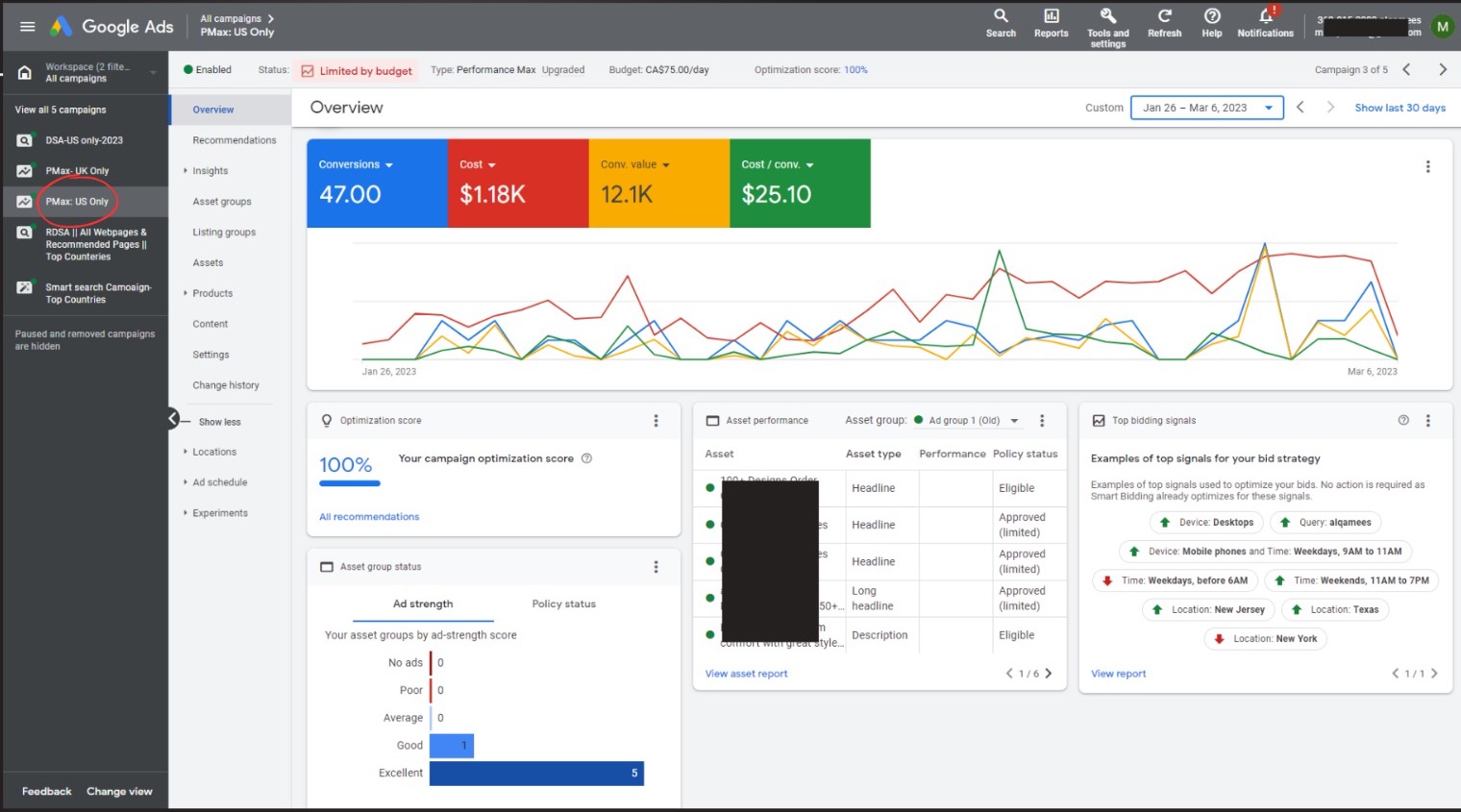
Google Ads Performance Max reporting on a UAE account with international delivery
Performance Max on a UAE account selling into international markets as well as locally.

UAE account · Performance Max

Catalogue-driven campaigns, and why the feed is the campaign.

Performance Max and dynamic catalogue campaigns are the most efficient inventory available to a brand with hundreds of variants, and they are almost entirely determined by feed quality rather than by settings.

On most UAE fashion feeds we inspect, the fixable defects are the same: missing size and colour attributes, titles that do not contain the words buyers search, and stock levels that are hours out of date. Correcting that typically moves performance further than any bidding change.

  • Complete size, colour and availability attributes on every variant
  • Titles written for the terms buyers actually type
  • Stock synced closely enough to stop advertising sold-out sizes
AED 8M+ Combined ad spend managedAcross 25+ brands and clinics

The figures above are from live accounts under our management.

How we work with fashion brands

The number that tracks
your bank balance.

What you get

  • A target with returns, both shipping legs and payment fees already subtracted
  • On-body fit content with stated heights and measurements across your core cuts
  • A complete, correctly attributed catalogue feed before we build campaigns on it
  • Cash-on-delivery and prepaid orders reported separately
  • Full ownership of the account, the shoot files and the customer data

What you won't get

  • A platform ROAS figure presented as if it were profit
  • Dynamic campaigns built on a feed with missing sizes and stale stock
  • Spend scaled before the sizing content on your top sellers is fixed
  • A size chart treated as a substitute for showing how a garment sits

Questions

What fashion and modest
wear brands ask us.

The return rate and the cost of handling it, far more than the cost per purchase. A brand at 4x reported ROAS with 30% returns is often making less than a brand at 2.5x with returns in single figures, because refunds, two shipping legs, handling labour and payment fees all come out of the margin on what was kept.

Take a month of gross revenue, subtract refunded value, subtract outbound and return shipping on everything including items that came back, subtract payment and cash-on-delivery fees, subtract cost of goods on what stayed sold, then divide by ad spend. For most brands we audit, the gap between that and the dashboard figure is large enough to change their spending decisions.

Mostly with content. State the model's height and the garment measurements, show the fabric moving rather than photographed flat, and say plainly which cuts run small or long. Put it in the ads as well as the product page. It lowers returns and tends to raise conversion at the same time, which very few changes do.

Because a repeat customer already knows what fits them, so they return far less than a first-time buyer who is guessing. On a UAE store we manage, returning customers produced 51.6% of a AED 478,539 quarter. Retention in this category is simultaneously a revenue strategy and the most reliable return-rate fix available.

Often you have to, because in parts of the Gulf it remains a large share of orders. But a COD order is worth less than a prepaid one once you account for refusal rates, collection fees and the longer cash cycle, so it should be reported separately and acquisition should lean toward the sources that produce prepaid baskets.

Because dynamic catalogue and Performance Max campaigns are largely determined by feed quality. Missing size and colour attributes, titles without the words buyers search, and stale stock levels all cap performance in ways no bid adjustment can recover. On most UAE fashion feeds we inspect, fixing the feed outperforms any change to campaign settings.

Around Ramadan and Eid, occasion and wedding seasons, and the opening window of each of your own drops, when interest is highest and the size run is still complete. Spreading budget evenly across a month misses the window where a new collection converts best and keeps spending once the popular sizes are gone.

We calculate your contribution after returns, which is usually the first time a brand sees that number next to its platform ROAS. You will leave with that figure, the sizing-content fixes for your top sellers, an assessment of your feed, and the target we would run the account to.

Fashion and modest wear, UAE

Ready when
you are.

Book a strategy call. We will calculate what your account returns after refunds, shipping and fees, and show you where the sizing content is costing you margin.

Senior-led accounts · Contribution reported weekly · Dubai based

Scroll to Top