
An enterprise AI visibility plan needs a defined audience, reliable business facts, clear page ownership and evidence for important claims. Use the first 90 days to establish a baseline, improve a priority set of pages and review comparable results. Treat 90 days as a working plan, not a promised ranking deadline.
The short version
- Choose a priority buyer journey before trying to cover the whole organisation.
- Assign owners for technical access, content, product facts and approval.
- Report work delivered and observed outcomes with separate evidence.
Choose the business decision you want to support
“Make the whole group visible in AI” is too broad to begin with. Choose an audience, offer and market where clearer information could help a real purchase.
For a hypothetical UAE software company, the first scope might be inventory management for distributors. For a property business, it might be helping buyers understand a particular project and its verified purchase process. For a multi-branch clinic, it could be accurate discovery of one service across its actual branches.
Define the next step you want the buyer to take. An implementation enquiry, a sales meeting and a consumer checkout need different pages and measurement.
Agree one record of business facts
Enterprise sites often have inconsistent descriptions across product pages, regional pages, partner profiles and older announcements. Start with the facts buyers need.
Confirm names, services, locations, product capabilities, availability, support coverage and evidence that can be published. Identify who approves each fact and where the current version lives.
A claim about data hosting or a product integration should be checked by the appropriate internal owner. A marketing editor should not infer it from an old sales deck.
Days 1 to 30: establish the baseline
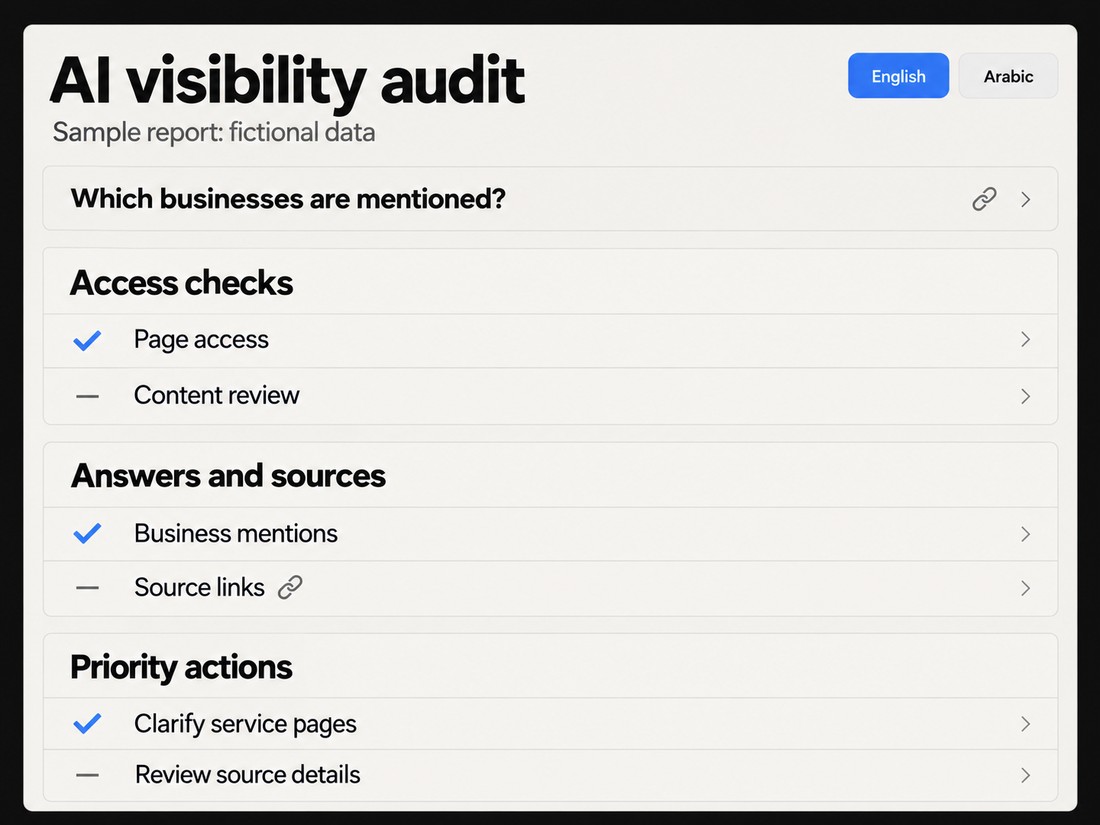
Review a manageable set of priority commercial pages and supporting guides. Check access and indexation where relevant, then run an agreed buyer question set across the selected platforms and languages.
Record brand mentions, source URLs and factual errors. Keep discovery questions separate from questions that already name the company.
Inspect repeatedly cited competitor or third-party pages. Identify useful information they provide without assuming you know why the platform selected them.
| Period | Work | Reviewable deliverable |
|---|---|---|
| Days 1–30 | Agree audience, facts, priority URLs and question set | Baseline with confirmed gaps |
| Days 31–60 | Fix access and improve approved source pages | Published changes with owners and evidence |
| Days 61–90 | Repeat checks and inspect relevant enquiries | Comparison report and next priorities |
Days 31 to 60: improve the buyer journey
Fix confirmed access issues and conflicting facts. Improve the pages that explain your offer and the evidence behind it.
For the software example, a useful service page should explain the implementation scope, integration responsibilities, support arrangements and fit. A supporting guide can explain how distributors compare their requirements.
Use subject specialists to add detail the team actually knows. Document examples and constraints. Avoid filling gaps with invented customer results or unsupported performance figures.
Link guides to their relevant commercial destinations. Make sure the buyer can move from research to a useful enquiry without losing context.
Days 61 to 90: review comparable evidence
Repeat the saved questions under comparable conditions and review any platform reporting available. Record changes in citations, factual accuracy and brand representation.
Also inspect identifiable referral visits and suitable enquiries. Talk to the sales team about the questions those buyers bring. Visibility is useful only when it supports the business journey you agreed.
Do not use the number of articles published as the sole success metric. It shows activity, not whether the information became more useful or buyers understood the offer.
Who needs to own the work?
Marketing owns the brief and editorial priorities. Technical teams own access and implementation. Product or service owners verify facts. Appropriate reviewers approve claims where specialist or regulatory knowledge is involved.
Keep responsibilities explicit. A task such as “improve authority” is hard to approve. “Publish a verified implementation guide with named ownership and current integration details” is concrete.
Use the organisation's existing approval process. A good AI visibility project should fit that process, not create another unmaintained source of company facts.
What belongs in the monthly report?
Include the agreed scope, tasks completed, observed results, factual issues, business outcomes and next priorities. Separate what you changed from what the platform showed afterward.
Microsoft's AI Performance documentation provides one example of citation reporting, with limits on what those metrics mean. Google's AI features guidance explains its own reporting context. Neither provides one universal enterprise AI ranking.
If monitoring software is involved, state how the answers were collected. Do not present an automated test as identical to every buyer's live experience.
What should you ask an agency before starting?
Ask which audiences, URLs, languages and platforms the first phase covers. Ask who will implement the recommendations and who will keep the facts current.
Require ownership of the content, question logs and reporting data. Agree how the scope changes if the first review finds technical problems instead of content gaps.
AdGrow's AI visibility services can help define those page and information priorities. Begin with a free starting audit, then define the enterprise scope separately. Our audit guide shows how to record the baseline.
At this scale the work is mostly governance: who owns the facts, who signs off a change, and what gets measured each month. See how we work on AI visibility, or request the free audit.
Frequently asked questions
Can an enterprise brand expect AI rankings within 90 days?
The period is a planning window, not a guarantee. Access changes, indexing, competitive content and the platform's own selection all affect the outcome.
Should we test every product and region immediately?
Start with a priority journey and expand after the process works. An oversized initial question set can create reporting work without enough useful implementation.
Who should approve enterprise AI content?
Use the owners appropriate to the facts: marketing for the brief, technical teams for access, product specialists for capabilities and qualified reviewers where specialist claims require them.
Sources and further checks
Platform guidance checked on 12 October 2026. Practical recommendations and hypothetical examples are AdGrow’s editorial guidance, not platform guarantees.